
Christopher Cheetham
CEO | Ptera Technologies
In fintech, founders rarely lose because the idea is weak. They lose because reality shows up late.
A product can look compelling in a pitch deck, test well with users, and attract real investor interest. But once the build collides with sponsor bank expectations, compliance controls, vendor dependencies, and operational readiness, momentum can disappear fast. What looked like a product problem turns out to be an execution problem.
And by then, capital has already been spent.
This is especially true for founders entering fintech from outside the sector.
That is not a criticism. In fact, some of the best fintech companies are built by outsiders who see customer pain more clearly than incumbents ever did. The problem is that fintech is not just software. It is software inside a regulated, operationally fragile, third-party dependent environment.
Founders who underestimate that distinction often build something that works in demo, but not in production.That is where value is destroyed. Before we get into how to avoid it, it is worth looking at the three mistakes that cause it most often.
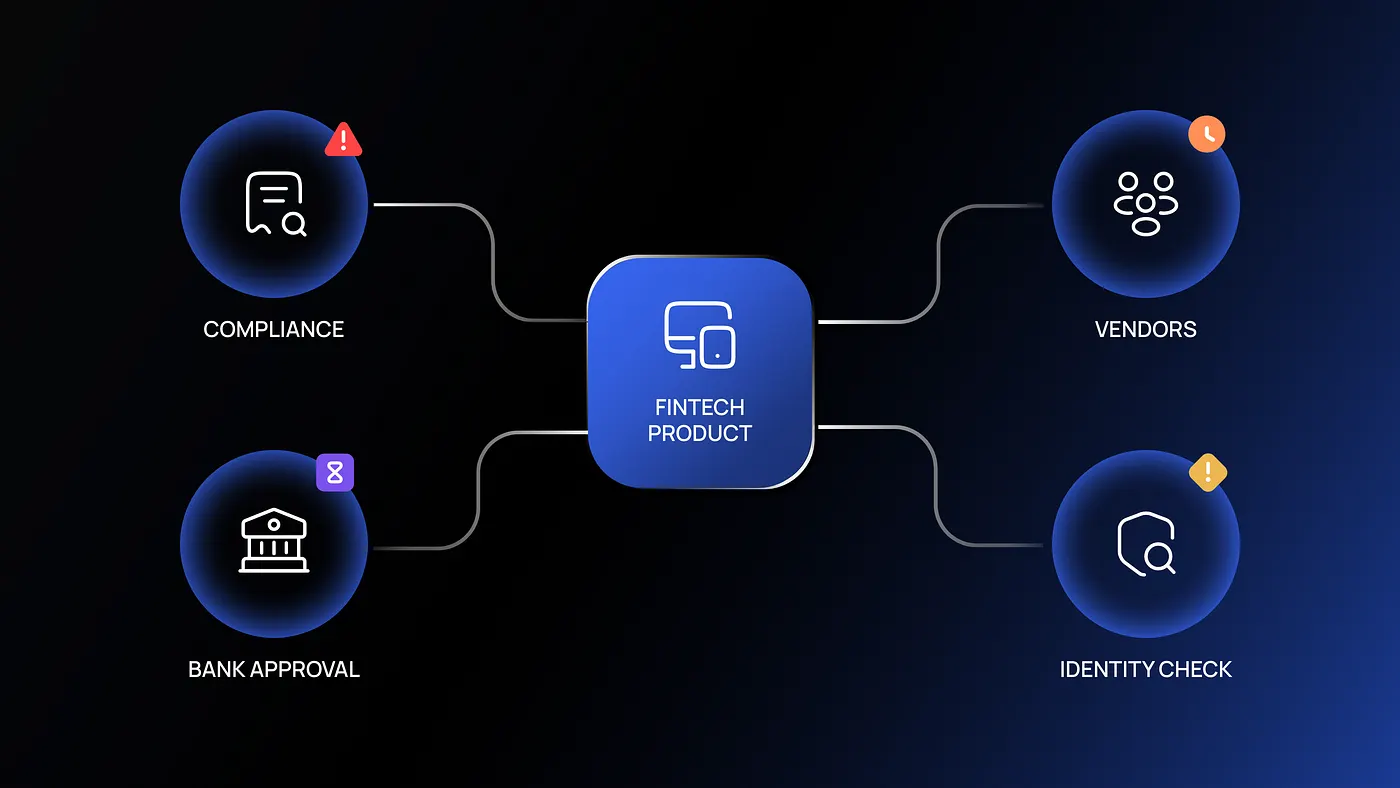
The most common mistake is assuming that compliance can be layered in later. It cannot.
In most fintech models, compliance is not a feature or a legal workstream sitting beside the product. It is embedded in the product architecture itself. It affects data flows, permissions, reporting, controls, case management, auditability, vendor selection, customer experience, and escalation design. If those decisions are made too late, the company is not refining the product. It is rebuilding it.
The second mistake is choosing vendors based on speed, brand recognition, or surface-level API quality without understanding how those choices will be viewed by a sponsor bank, regulator, or downstream enterprise customer.
Founders are often told to move quickly and assemble the stack. That is sensible advice in pure software. In fintech, however, the wrong stack can create months of delay, re-papering, integration churn, control gaps, and uncomfortable questions in diligence.
The third mistake is failing to appreciate how many stakeholders must say yes before revenue arrives.
In other sectors, the product team and the customer may be the primary drivers. In fintech, there are many more veto points. A sponsor bank may object to the control environment. A compliance advisor may flag monitoring or recordkeeping gaps.
A processor may create operational constraints. A vendor may not support the reporting obligations the model requires. An investor may lose confidence when launch timelines slip again. Each of these issues can be survivable on its own.
Together, they can stall a company for two or three quarters.

This is why fintech product builds should be de-risked early, not defended late.
Founders do not need more generic consultants. They need operators who understand how product, engineering, compliance, vendors, and bank expectations fit together in the real world. They need people who can identify hidden risk before it becomes visible in a board meeting or sponsor-bank review.
That is the role firms like Ptera should play.
Ptera is not a conventional dev shop. It sits in the gap where many fintechs struggle most: between product ambition and regulated execution. That gap is where capital gets burned. It is where teams discover that the architecture is not audit-ready, the reporting is insufficient, the vendor stack will not survive diligence, or the implementation approach creates avoidable compliance friction.
“Bringing in a specialist early changes the shape of the risk.”
Instead of discovering issues after contracts are signed and code is written, founders can pressure-test the core assumptions upfront.
Those are not academic questions. They determine whether a fintech reaches revenue efficiently or spends its next round fixing what should have been addressed before the first build.

For early-stage founders, this matters even more because every avoidable rebuild has a compounded cost. It is not just the engineering expense. It is the lost time, the distraction on the leadership team, the pressure on runway, the stress on investor relationships, and the reputational damage that comes with a launch that repeatedly slips.
In fintech, delays are rarely measured in days. They are measured in fundraising pressure, missed market windows, and weakened negotiating leverage.
The best founders understand this intuitively. They know speed is not just about writing code quickly. It is about reducing the chance of expensive reversals. A faster path to revenue often starts with more discipline before the build, not less.
That is also why the right time to bring in experts is earlier than many founders think.
Not after a failed launch.
Not after the bank raises concerns.
Not after the vendor stack is already hardwired into the roadmap.
The right time is before key architectural decisions are locked, before contracts narrow flexibility, and before teams become emotionally attached to a build path that may not survive external scrutiny. The highest-return engagements are often the earliest ones: a bank-readiness architecture review, a vendor risk assessment, or a compliance-to-code workshop that turns abstract obligations into concrete product and engineering requirements.
These are not heavyweight exercises. Done well, they are low-commitment, high-signal interventions. Their purpose is simple: surface hidden risk while it is still cheap to fix.
For investors, the logic is obvious. Portfolio companies do not fail only because founders lack vision. They fail because regulated execution is harder than expected, and because the cost of learning those lessons internally is too high.
For founders, the lesson is just as important. In fintech, credibility is not earned only by the elegance of the idea. It is earned by proving the business can survive contact with banks, vendors, auditors, regulators, and enterprise partners.
That is why de-risking the build is not bureaucracy. It’s strategy.
The strongest fintech companies are not the ones that move recklessly. They are the ones that move quickly without creating hidden execution risk that explodes later. Founders from outside the sector can absolutely win in fintech.
But they should not try to learn every bank, compliance, and vendor lesson through trial and error. That is an unnecessarily expensive way to build.
The smarter approach is to bring in specialists who have seen where these projects break, know how to structure around those failure points, and can turn regulatory and operational complexity into a launch advantage rather than a drag on growth.
In fintech, expert support is not a luxury line item.
It is often the cheapest form of insurance a founder can buy.
If you are building in fintech and want to pressure-test your architecture, vendor stack, and launch readiness before hidden risks become expensive, learn more at ptera.tech.